



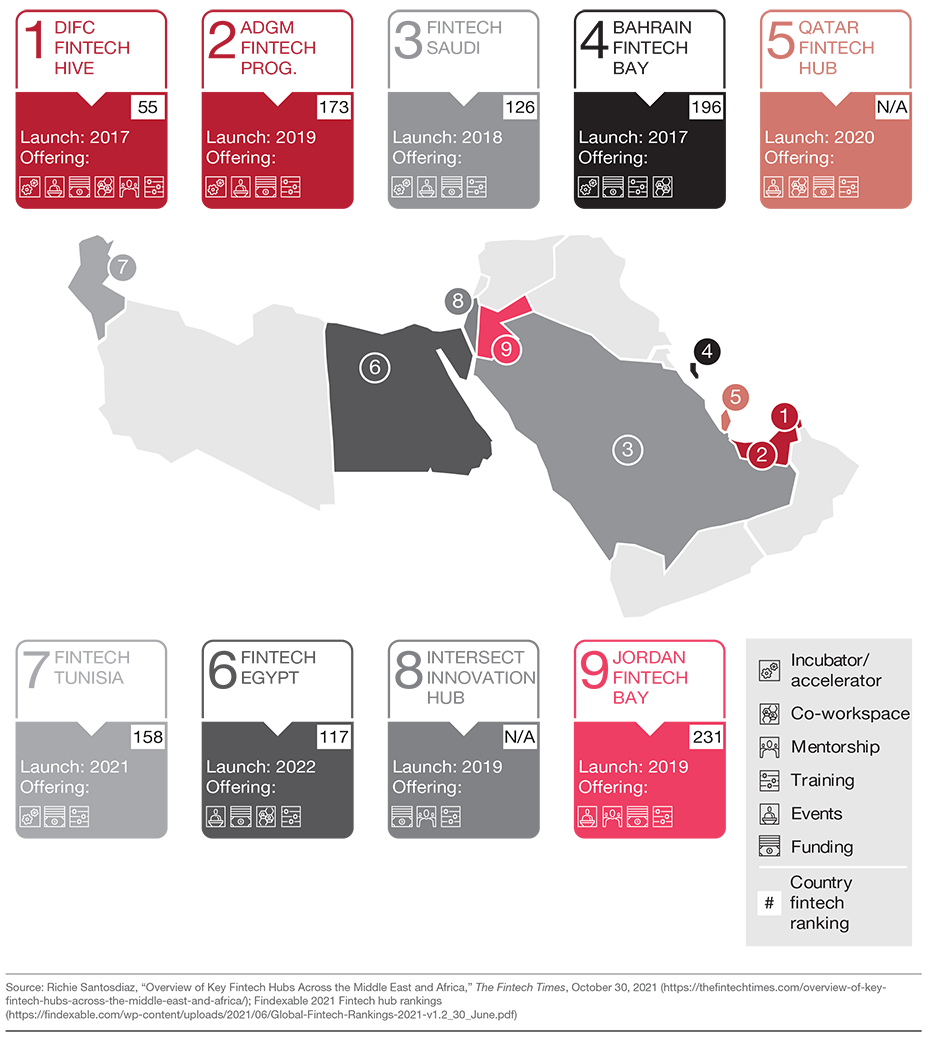
The Middle East fintech growth story is no longer speculative. Across the Gulf Cooperation Council (GCC) and wider region, fintech has moved from a niche innovation space to a core pillar of economic and financial transformation. Governments, regulators, banks, and startups are aligning around digital payments, digital banking, lending platforms, and embedded finance at a pace that outstrips many mature markets.
A unique mix of policy decisions, demographic factors, infrastructure investment, and unmet market needs drives this acceleration. Rather than copying Western fintech models, the Middle East is building its own version—one shaped by state-led reform, mobile-first populations, and rapid regulatory execution.
1. Government policy is actively enabling fintech
One of the strongest drivers of fintech expansion in the region is deliberate government support, not just market demand.
Countries such as the United Arab Emirates and Saudi Arabia have positioned fintech as a strategic priority within broader digital economy and financial sector reforms. This includes:
- Regulatory sandboxes that allow fintech firms to test products with real users
- Digital banking licenses and challenger bank frameworks
- Open banking and payment modernization initiatives
- National strategies linking fintech to SME growth and financial inclusion
Instead of slowing innovation through over-regulation, authorities have focused on controlled experimentation, which reduces risk while accelerating adoption.
2. A young, digital-first population is pushing adoption
Demographics play a critical role in Middle East fintech growth.
Large segments of the population are:
- Under 35
- Highly mobile-centric
- Comfortable with digital wallets and app-based services
In many countries, consumers skipped legacy banking behaviors altogether and moved straight to mobile payments, super-apps, and digital wallets. This created fertile ground for fintech platforms offering faster onboarding, localized UX, and real-time services.
For fintech companies, this means lower customer education costs and faster behavioral shifts compared to older markets.
3. Financial inclusion gaps created an opportunity
Despite high smartphone penetration, parts of the Middle East historically faced:
- Limited access to traditional banking
- Complex onboarding for SMEs and freelancers
- High remittance costs for expatriate workers
Fintech platforms stepped into these gaps by offering:
- Digital wallets and neo-banking services
- Faster, lower-cost cross-border payments
- Alternative lending and credit scoring models
- SME-focused invoicing, payroll, and expense tools
This alignment between fintech products and real economic friction helped accelerate adoption organically.
4. Payments are the entry point — but not the end game
Digital payments are often the first visible sign of fintech growth, but they are only the foundation.
Across the Middle East, fintech expansion now includes:
- Buy-now-pay-later (BNPL) platforms
- Digital-first banks and wallets
- Cross-border remittance platforms
- Embedded finance inside e-commerce and mobility apps
- Regtech and compliance automation for financial institutions
Once users trust digital payments, fintech firms can layer lending, insurance, wealth, and B2B services on top—creating full financial ecosystems rather than single products.
5. Strong capital backing and sovereign participation
Unlike many regions where fintech growth depends mainly on private venture capital, the Middle East benefits from sovereign-backed investment.
State-linked funds, national development banks, and public-private partnerships have:
- Invested directly in fintech startups
- Funded accelerators and innovation hubs
- Partnered with global fintech firms to localize products
This patient capital model allows fintech firms to scale sustainably, focus on compliance, and align with national priorities rather than chasing short-term growth at all costs.
6. Regulatory modernization is happening fast
Financial regulators across the region are modernizing in parallel with fintech growth.
Key developments include:
- Digital KYC and e-identity frameworks
- Open banking APIs and data-sharing standards
- Clearer rules for e-money, wallets, and digital assets
- Licensing regimes designed for fintech—not just banks
This regulatory clarity reduces uncertainty for founders and investors, making the region more attractive for long-term fintech deployment.
7. Banks are collaborating instead of resisting
A major reason fintech is scaling faster in the Middle East than in some mature markets is the collaborative posture of traditional banks.
Rather than viewing fintech solely as a threat, many banks:
- Partner with fintech startups
- Integrate fintech solutions into core banking systems
- Launch their own digital-only brands
This collaboration accelerates market education, reduces trust barriers, and allows fintech services to reach large user bases quickly.
8. Fintech supports national economic goals
Fintech growth is not happening in isolation. Governments view it as a tool to:
- Support SME growth and entrepreneurship
- Improve tax and compliance transparency
- Attract foreign investment
- Reduce cash dependency
- Strengthen regional financial hubs
Because fintech aligns with these broader objectives, it continues to receive policy attention, funding, and institutional support.
9. Challenges remain, but momentum is strong
Despite rapid progress, fintech firms still face challenges such as:
- Navigating different regulations across countries
- Scaling talent in compliance, risk, and cybersecurity
- Integrating with legacy financial infrastructure
However, the overall direction is clear: fintech is becoming core financial infrastructure, not a peripheral innovation layer.
What this means going forward
The Middle East is not just adopting fintech—it is rebuilding financial systems around digital-first principles. As payments mature, the next phase of growth will likely focus on:
- Embedded finance in everyday services
- AI-driven credit and risk models
- Cross-border fintech platforms serving Africa and South Asia
- Deeper integration between government services and financial platforms
This positions the region as one of the most dynamic fintech markets globally over the next decade.
Quick summary
- Middle East fintech growth is driven by policy, demographics, and infrastructure
- Governments actively enable fintech through regulation and investment
- Payments led adoption, but lending, banking, and B2B fintech are scaling fast
- Sovereign capital and bank collaboration accelerate growth
- Fintech is becoming a foundational layer of the digital economy
